New research from Rutgers on dental implants has caused some concerns about dental implants. (You can read an in-depth study, here). Of course, one should not believe everything one reads on the Internet, and the media tends to overhype things. But let’s take a look at this new study, and let’s talk about some of the risks and benefits of dental implants.
Every Surgery Has Risks and Benefits
First and foremost, every surgery has risks and benefits. Nothing in life, and especially nothing in surgery, including oral surgery such as dental implants, is risk-free. Everything has risks, and everything has benefits. Dental implants have been used for decades. They are used across many patient situations. They have been around for many, many years and are well-researched. Dental implants can restore chewing function, improve appearance, and support quality of life. And let’s be honest, dental implants can make you look better. They can improve your smile. So, in many situations, the choice is not between a perfect smile and dental implants. Rather, the choice is between a mouth that is substandard, up to and including impacting how you eat and how you chew, and cosmetically inferior. So you have a choice between leaving things alone and being unhappy and suffering, or embracing dental implants.
What Does the Rutgers Study Say About Dental Implant Infections?
Rutgers researchers did a study about dental implants and infections. This study was published in March 2026. It discusses a term, or a situation, or an illness called peri-implantitis. This is an inflammatory condition that damages tissue and bone surrounding an implant. Bacteria are in your mouth at all times, and bacteria can build up around implants. In some sense, titanium, the study indicated, may interfere with some of the immune system. So scientists are learning more about how dental implants can have complications, but this is not a reason to throw the baby out with the bathwater.
How Common Are Dental Implant Infections?
The study cited estimates that 10% to 20% of dental implant patients may eventually develop peri-implantitis, but the rates vary. This is extremely different from common discomfort or temporary inflammation following dental implant surgery. And even peri-implantitis does not automatically mean that the implants have failed. Every individual is different, and our office works hard with each individual on a protocol to minimize the risk of infection. But in no way can that risk become zero. No surgery is risk-free.
How Can Patients Minimize the Risk of Infection?
Among the things that can be done to minimize the risk is, first and foremost, a thorough evaluation of the patient before implants are considered. A second issue is to explore existing disease and other individual risk factors. Then, from a patient perspective, choosing a reputable professional implant surgeon is very important. Finally, after surgery, there is the care that our office will explain, and then we strongly encourage that all patients have professional and regular dental implant visits and that they learn something about caring for their implants.
Why Choosing a Professional Dental Implant Surgeon Matters
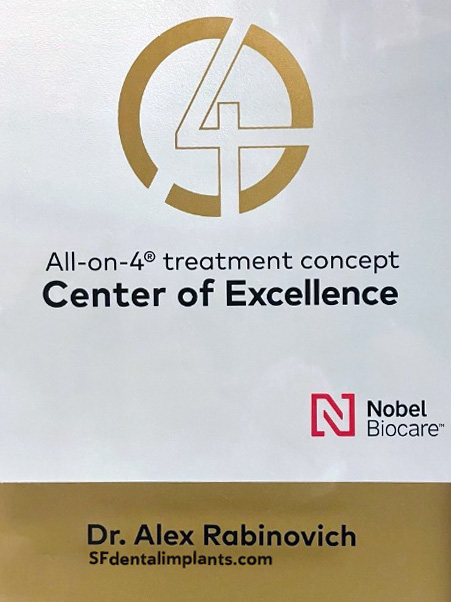
Beyond the findings of the Rutgers study, it is critical to choose a reputable surgeon. Many people travel out of the country to Turkey or Mexico for their implants. The United States has its best-in-class regulatory and professional standards for dental implants. Our San Francisco Dental Implant Center and Dr. Alex Rabinovich meet these standards for our San Francisco Bay Area patients.
Conclusion: Make an Informed Decision About Dental Implants
In summary, dental implants have risks and benefits. We do everything we can to minimize these factors. However, no surgery is risk-free. On the other hand, however, one should not just read the Rutgers study and panic and think that nothing can be done. Most patients choose between two imperfect options. They want or need dental implants because their mouths are in bad shape, they are missing one or more teeth, and this has both health and cosmetic implications. They have to make an educated choice between staying with what they have, which is often a very substandard mouth, or accepting the new technology of dental implants. An informed decision is absolutely important. If you live in San Francisco and are considering dental implants, please consider our office. Please reach out for a consultation. No two patients are alike. We strongly recommend an individualized, one-on-one consultation.